
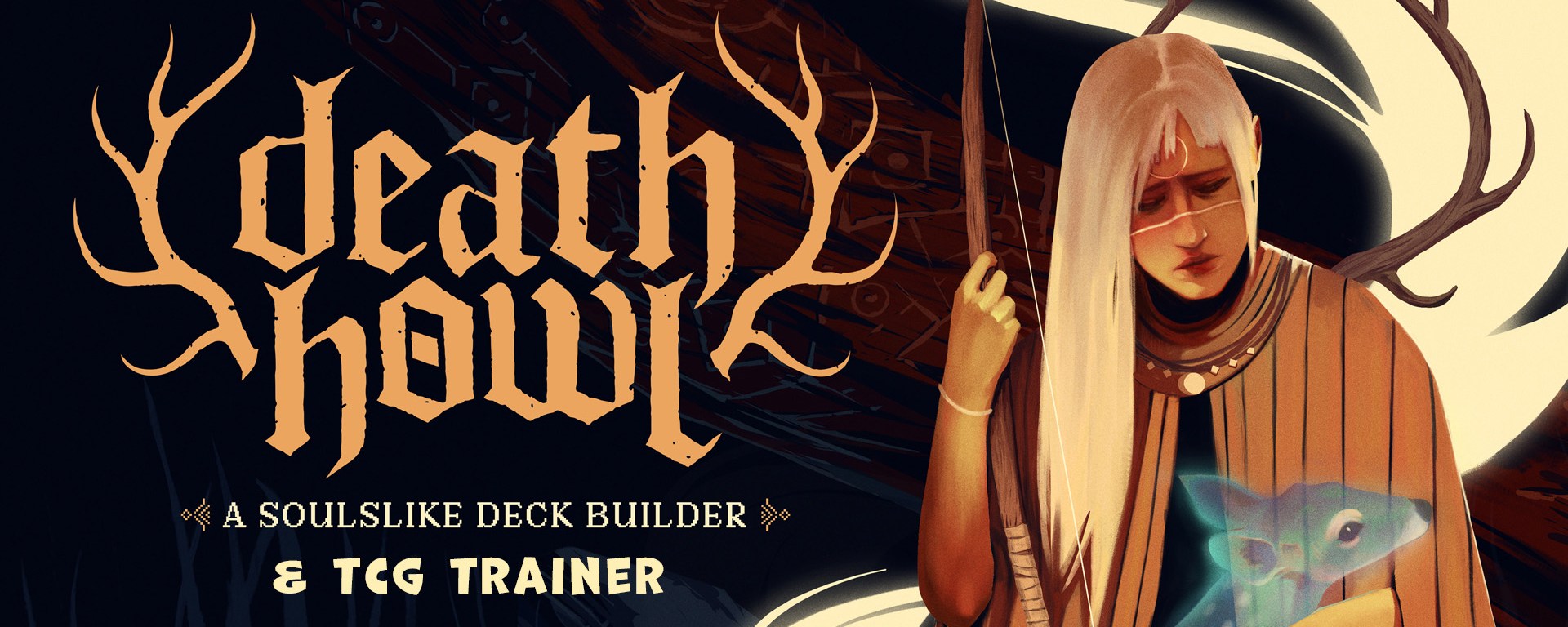
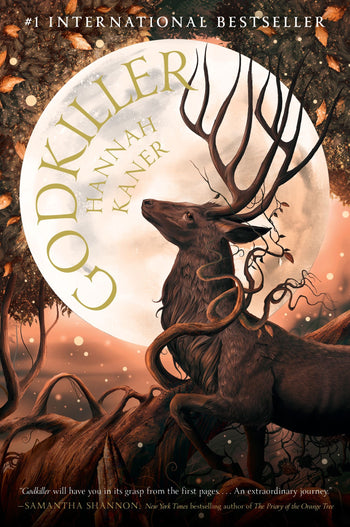
Death Howl came to consoles about a week ago and I’ve been playing non-stop — every night and whenever I find a break throughout the day. The funny thing is that I was only first interested in this game because the cover art and colors reminded me of the book I was reading when Death Howl first popped up on my radar. At the time I was reading the first book in the Godkiller (by Hannah Kaner) book series. The book cover features a beautiful deer with their antlers and tree roots wrapping around them, sort of like an extension of their antlers.
My curiosity in Death Howl may have come from a coincidence in art styles, but I continued to do my research from there. I would have gotten into this game earlier, but I decided to hold out for the console release — since my PC is no good. Death Howl couldn’t have come to the Nintendo Switch 2 at a more perfect time — for me.
Death Howl is a soulslike deck builder that fuses together exploration and turn-based card combat.
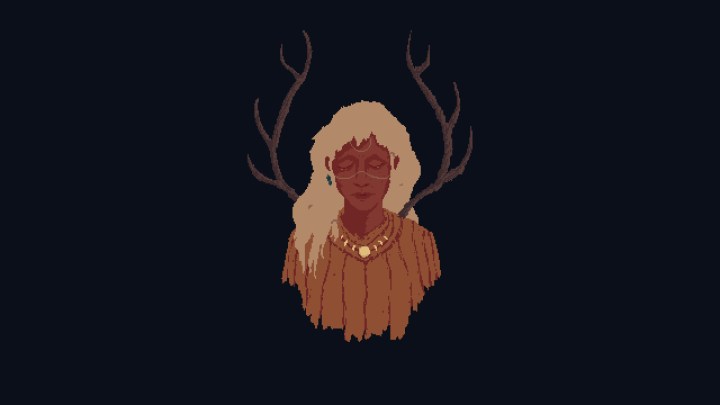
“Death Howl tells a haunting tale of grief, healing, and resilience. As Ro, engage in tactical turn-based battles, mastering decks of powerful cards and shamanic totems while uncovering lost secrets that shape her journey.”
-from 11 bit studios (publisher)
TCG Trainer
When I began my journey in Death Howl, I couldn’t win a battle to save my life. I kept trying and failing, but I wanted to continue exploring this world. I stuck with it and I’m happy I did, because I’m still losing battles, but I’m playing smarter. I’m learning to take my time and make the most out of each turn in battle.
This weekend I’m attending my second Magic the Gathering pre-release event. My first pre-release was for the Magic the Gathering X Avatar: The Last Airbender set last year. When I saw there was a Magic the Gathering X Teenage Mutant Ninja Turtles set in the works, I knew I would be back for that one. I grew up a TMNT kid.
What I realized from playing Death Howl is that I’ve always been terrible at managing the order of playing cards in TCGs and tabletop gaming. This is because I do the same thing in video games with deck building and card combat. I just throw random cards down.
I know which cards are good, and which ones I should play — most of the time. Still, there are so many times where I realize I’m doing it all wrong after taking a few actions. The combo I wanted to pull off doesn’t work unless I had played the last card before the first card, or some other stupid mistake.
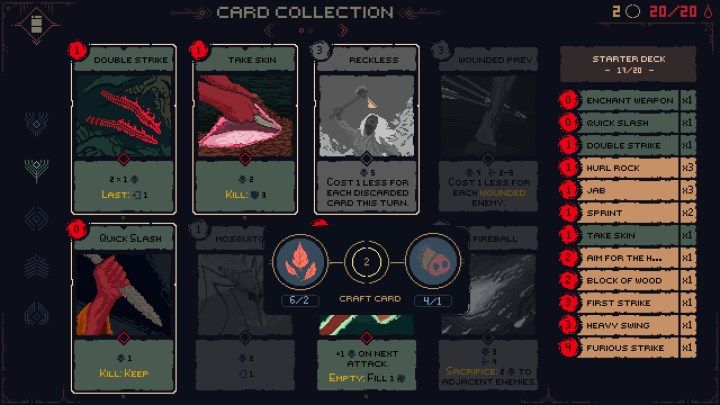
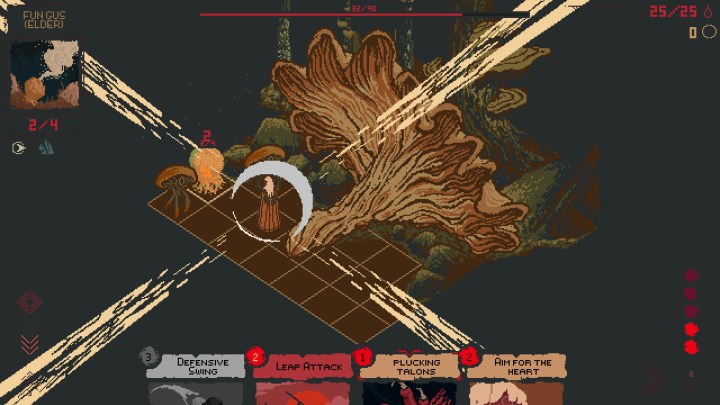
Early on, this continuously happened to me in Death Howl. Attack cards come in the form of melee and ranged. There were so many times where I ended up too close for my remaining ranged attack card, or too far away for the big melee finisher. I also wasn’t thinking about the action points I would have to use for movement on the gameboard (which isn’t a component of Magic the Gathering).
The battles in Death Howl play more like a tabletop board game than a full-on trading card game. The battles take place on a “game board” where you have a set number of actions each turn. Actions may be used to play cards or to move around the board.
Death Howl delivers on the classic feeling of, I wish I had just one more action point to spend this round, that so many great tabletop games give you. You always have more actions than you can pay for each turn. That’s why strategy is important. After playing Death Howl for the past week, I think I will go into the Magic the Gathering X Teenage Mutant Ninja Turtles pre-release with more restraint than the Magic the Gathering X Avatar: The Last Airbender event. Maybe I’ll win more than one match this time.
Ro & Olvi | mother & son
The more I play Death Howl, the more I love everything about it. The world is dark and gritty, the pixelated art style is so simple, yet the world feels so alive. I’m interested in learning more about Ro and Olvi (mother and son).
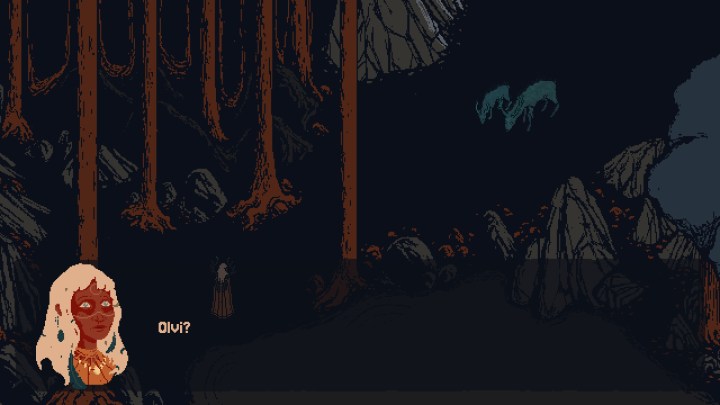
The game is constantly changing as well. As you enter new realms, there are new cards to unlock and new creatures to battle. Just when I was starting to get good at Death Howl, I moved into a new realm and everything changed. I felt powerful in my last battles on the other side, but here I felt weak. I went back to losing most battles.
In the initial realm I stuck around until I had explored every nook and cranny. I unlocked each Sacred Grove (or fast travel point) in that first realm, cleared all battles, and picked up every resource (to the best of my knowledge). It was time to move on. Now I’m working on unlocking that entire area before moving along.
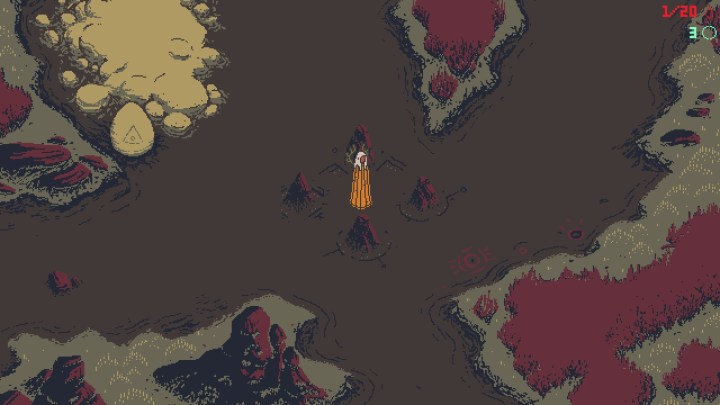
There are three big parts to this game. First, is the exploration portion. Go out and learn more about Ro’s story, find resources, secret lairs, and upgrade your deck. Second, is the battle. Use your deck to win turn-based battles. Third, is management. In the menu you can update your deck, choose battle totems, gain abilities, manage materials, and read your quest log.
After playing three roguelike deck builders last month (Gordian Quest, Monster Train 2, and Fairy Tail: Dungeons), it’s nice to play a different kind of deck building game. One where I get to explore and battle. In those three roguelike deck builders losing is still progressing, but in Death Howl you must win to progress.
Soulslike Deck Builder
Death Howl brought up another recent game, one that also had turn-based grid combat where you had to use action points, Demonschool. What I liked about Demonschool is that there was a setup phase before committing to battle. In the setup phase you can play out different scenarios and rewind before committing.
There were many times where I screwed up in Death Howl by moving too early. This basically ruined my entire strategy for that battle. If I had a setup phase where I could try things out, I would be much better at this game. However, a setup phase would take away from the Soulslike element. It would make Death Howl less difficult and less strategic.
The second soulslike element is that once you reach a Sacred Grove, if you choose to heal, your defeated enemies return. Winning the same battles makes you stronger. Still, there were many times where I needed to get past two battles to progress, but after winning the first battle I had barely enough life left to proceed. I had to return to the previous Sacred Grove and start that journey over.
One More Thing
My journey with Death Howl has been a weird one. I started off terrible and thought of leaving the game behind, but I stuck with it. I’m glad I did, because it has made me more mindful of strategy in other games.
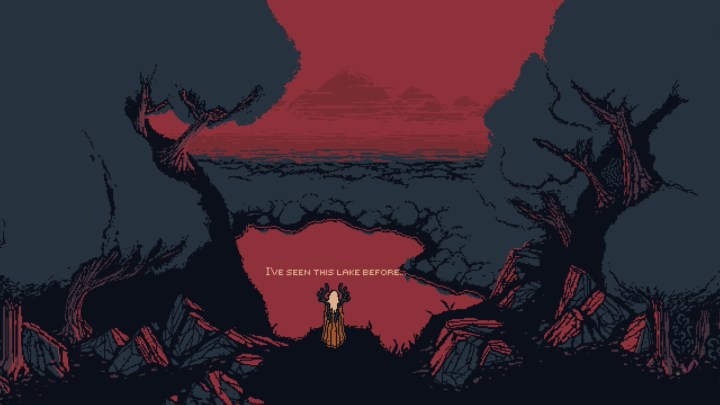
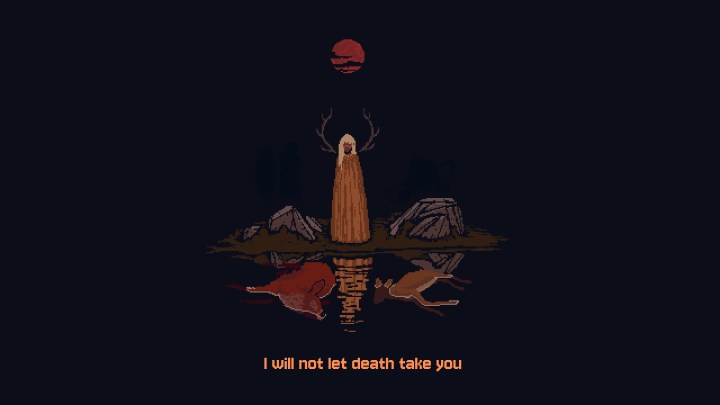
Another reason I was immediately into Death Howl was the whole intro video, which I had to watch multiple times due to not saving my progress after starting the game a few times. This pixelated sequence felt like it was directed by Robert Eggers (The Witch, Nosferatu).
I now realize that I have only explored less than half of the world in Death Howl, but I plan to explore and clear each realm. Using cards in battle adds the extra element of chance to this soulslike. In other soulslikes that feature real-time combat, it’s more about patience in endless boss fights. In Death Howl, you may easily be dealt a terrible hand of cards on a particular turn which can ruin an entire battle. I guess that’s where the deck building comes in to play.
*myVGBC.com was given a review code for Death Howl by the publisher (11 bit studios).
 VIDEO GAME BOOK CLUB