
Metroidvanias have been my jam ever since I purchased my Nintendo Switch back in 2017. I had played — and adored — many of them before the Switch, but the Switch really put me onto this genre. I always keep a couple of Metroidvanias in my backlog, and I am usually playing one or more at a time.
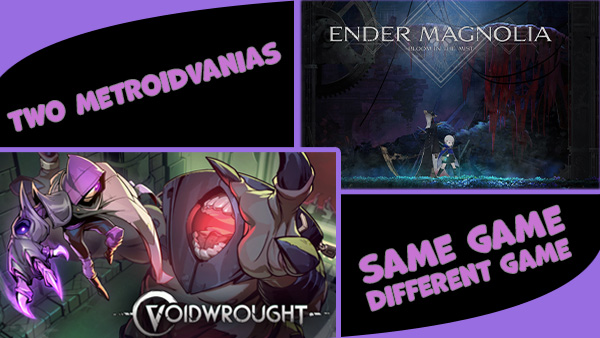
Lately, I’ve spent a couple of hours with two recently released Metroidvanias — Voidwrought and Ender Magnolia: Bloom in the Mist. I initially leaned more towards Ender Magnolia, but the more I played both games, the more I realized they were basically the same game following the same beats in a different order.
There were a few points that made Ender Magnolia stand out. The game features more diverse menus with an expanded leveling up system and RPG-like character progression. Voidwrought slowly adds in new mechanics, which I have yet to come across.
I’m not here to trash talk one game (Voidwrought) and lift another on a pedestal (Ender Magnolia: Bloom in the Mist). I just want to share my experience of playing both games at the same moment in time.
VOIDWROUGHT | A Classic Metroidvania
I started with Voidwrought. It’s a great intro to the world of Metroidvanias for anyone who isn’t familiar. Very classic and very easy to understand. You start off with some simple maneuvers — basic attack, jump, and roll.


Voidwrought did not immediately sink its hooks into me. I enjoyed it while playing, but could also easily move onto something else. Voidwrought has a slow start. I’m still searching for any form of unlockable abilities.
It wasn’t until this first boss fight versus The Council that I started to appreciate Voidwrought. I was previously running around spamming the attack button. After each death I’d be forced to replay the same moments over and over. I stuck to my spam attacks.
I tried to button mash my way through The Council fight as well. That wasn’t working. It wasn’t until I stepped back to learn The Council’s moves and took my time that I started making progress. This is something I’m continuously learning in all kinds of games. Take the time to enjoy it instead of running and gunning (and quickly dying) in unexplored areas.
I have yet to beat The Council, but I’m now way more invested in Voidwrought. I want to get past this boss and explore this underworld. I’m ready to unlock new abilities and face new enemies.
Some games are a slow burn, but they eventually get there — some never quite get there.
ENDER MAGNOLIA: BLOOM IN THE MIST | A New Twist
Ender Magnolia: Bloom in the Mist starts off strong with a beautiful anime-inspired cutscene. The game features soothing music and the world is so nice to look at. The game still follows those basic Metroidvania beats — explore new locations, find checkpoints, learn abilities, face tough bosses, enhance your character, and everything else. The combat is what really grabbed me.
Even though you (the player) are controlling Lilac’s attacks, it isn’t actually her fighting. She is being protected by different “spirits” (or Homunculus) that you encounter along the journey.
The game begins with Lilac only having a dodge ability. This is fixed quite quickly when she discovers a Homunculus who will protect her — by attacking. Although the player is controlling the attacks, it feels different due to the animation. There are many homunculi to find and each one features their own set of unlockable abilities.
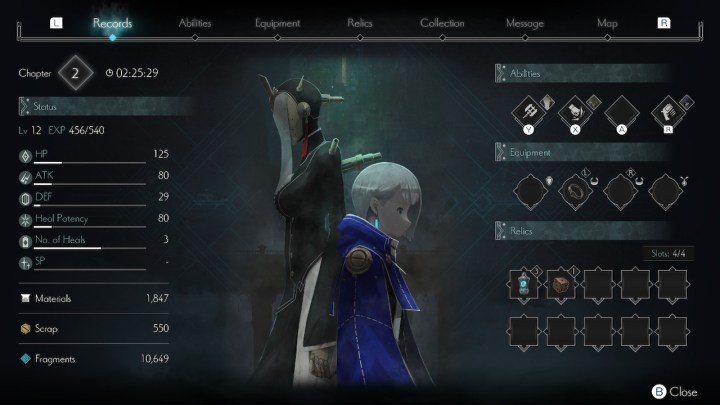

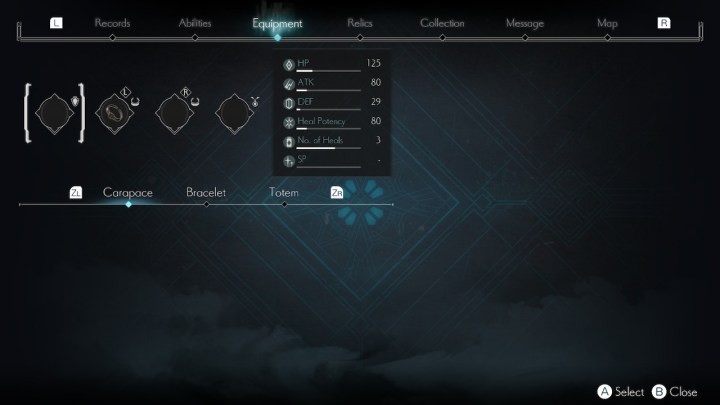
Ender Magnolia features a diverse menu with multiple pages of abilities, items, and lore. There’s even an RPG-like character progression system which allows you to track Lilac’s stats over time. From the start of this game I was finding new items and abilities, but it also doesn’t feel like a collect-a-thon.
Ender Magnolia: Bloom in the Mist is a sequel to Ender Lilies: Quietus of the Knights. I never played Ender Lilies, but a sequel usually adds and expands upon its predecessor.
SAME GAME \ DIFFERENT GAME
As I said before, both of these games (Voidwrought and Ender Magnolia: Bloom in the Mist) follow the same basic Metroidvania outline — explore the map, find checkpoints, upgrade your character, defeat bosses, progress the story.
It’s funny how game design can play a big part in the player’s perception of what a game is. I’ve had many “A-ha moments” when I’m playing a game and think, “Oh, this is just that one mechanic from that other game. It’s just being presented in a fresh, new way.”
Both of these games are fantastic Metroidvanias on their own, but it took me playing both of them at the same time to notice their similarities. My initial thought was these two games are completely different, but in the end I realized they are very much the same. I will continue playing both, and I wonder if my thoughts will continue to change?
 VIDEO GAME BOOK CLUB