
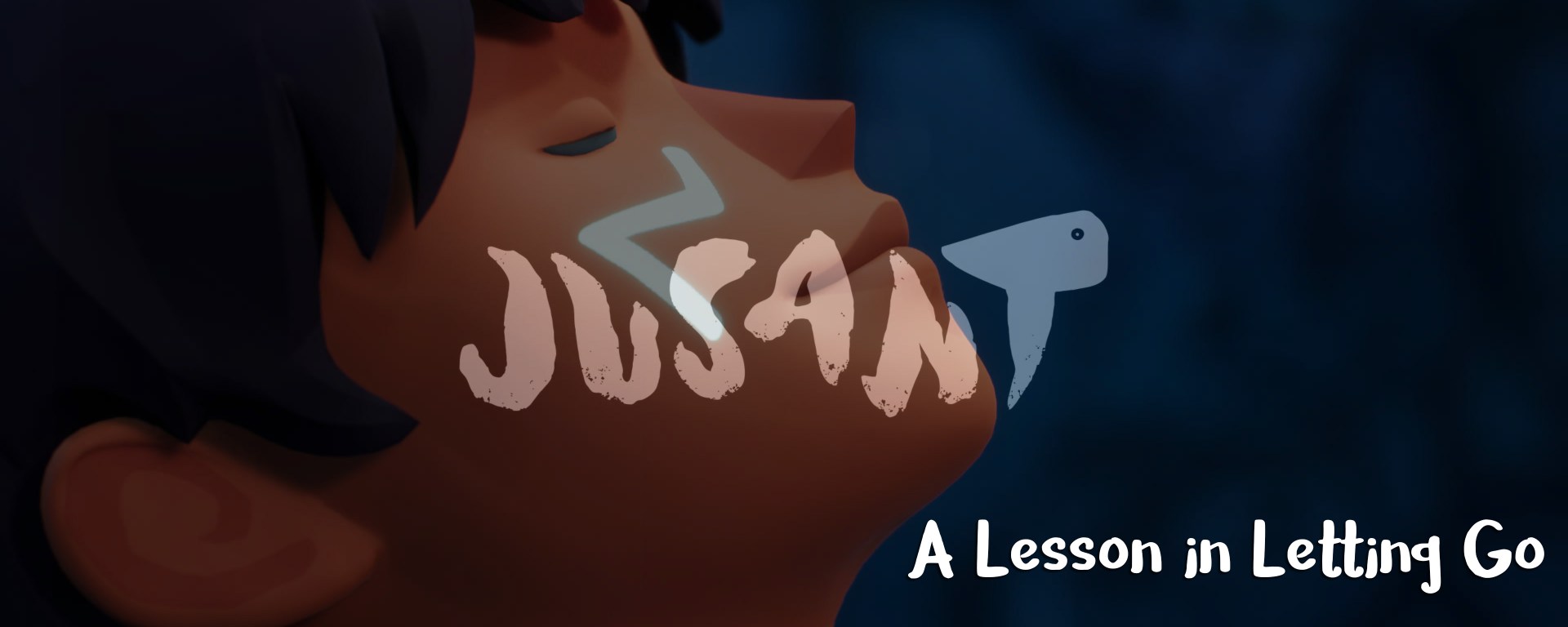
Jusant first caught my eye with its colorful, yet simple art style. I was also fond of the idea of climbing a giant mountain village and experiencing different climates and terrains along the journey. Check out this trailer and try to tell me this doesn’t look appealing…
Even with the high stakes of climbing higher and higher, way up into the sky, Jusant is somehow a relaxing and meditative experience. It took me almost a week to mainline the story.
Climbing All the Way Up

Jusant implements several climbing mechanics from previous games. There’s a stamina bar similar to The Legend of Zelda: Breath of the Wild and Tears of the Kingdom. There are multiple paths to choose from like climbing in Horizon: Forbidden West. As you climb you have the chance to place “pitons” as safety points like in Uncharted 4: A Thief’s End.
Those are some small similarities between Jusant and a few games which feature climbing. Climbing is just a small part of those games. In Jusant, climbing and exploration are the main objectives. While the team at DON’T NOD may have been influenced by games featuring climbing, they also created their very own unique climbing system.

In Jusant the player controls each hand separately, using the left and right triggers. Pitons are used to create safe midpoints along the climb, but also to create a swinging device to explore harder-to-reach areas. Jumping can help you reach new heights, but must not be overused. Each chapter introduces new elements to help on the journey — from environmental to supernatural effects.
The player must blend all of these elements to reach the next area. I rarely ran into the problem of running out of stamina while climbing in Jusant. The climbing feels like a puzzle with plenty of time to figure out your next move. You may even take a hanging break as you figure out your next move.
Storytelling: Past vs Present

Something Jusant does so well is tell multiple stories all at once — even with a silent main character. As you make your way up this abandoned mountain village, stories of the past are uncovered. Stories of what life used to be like up here. It is now an abandoned multi-level village, but was once populated by life on each level.
The main goal of Jusant is to make your way to the top of the mountain, but you are free to take as long as you need. Letters, dialogue, and sounds from the past are uncovered as you explore different areas.

I began my journey, as I do with so many games, believing I could uncover each and every secret on this mountain. I did not do that. While I explored what felt like a great portion of the mountain, I left a lot behind. I started off strong in the opening chapters, finding most items. As I progressed I became a poorer explorer, doing some light exploring while following the main path.
This is where the game became a lesson in letting go.
*Side Quest: I recently heard a conversation on comedian Mike Birbiglia’s Working It Out Podcast
(The guest was either Jim Gaffigan, Pete Holmes or Seth Myers). Mike mentioned that feeling of getting
off stage and thinking of every bit you messed up or left out that night. The guest said something like,
“That was the show that night.”
Instead of thinking about what didn’t make it into the show or where you “messed up,” you should think
that the audience got the show they got that night. They don’t know what the show was “supposed to be”
in your head, so they probably enjoyed it.
I recently performed stand up a handful of times. After my first few sets I was definitely beating myself
up over what didn’t make it into the show — because I forgot or left it out. I listened to this episode right
before my last time on stage, and got off stage with a different mindset. My last set felt like the best one
yet, even if I did close with a different story than what I planned to close with. I also ad-libbed a few
things that worked.
As I continued to play through Jusant as a light explorer, I still found plenty of notes and letters. There were some holes in the end, but instead of worrying about what’s missing I thought “This is the story I got from Jusant.” I can read through what I found and fill in the blanks with my own knowledge or an educated guess.

I completed the main story, which also gave me some information on the past. I have an understanding of why this huge mountain village is now abandoned, and that is what I love about this game. The gameplay was very exciting, relaxing, and rewarding. I also really cared about each note that I found. I would take the time to read it and learn more about this world — that’s something I am trying to do more in games.
*myVGBC.com was provided a review code for Jusant by the publisher.
 VIDEO GAME BOOK CLUB