

My current gaming trend of 2023 has been to revisit prequels any time a sequel is announced. That can mean finally concluding my journey in an unfinished game — Mario + Rabbids: Kingdom Battle and The Legend of Zelda: Breath of the Wild. It may also consist of entirely replaying a previously beaten game — God of War (2018) and Star Wars Jedi: Fallen Order.
With the recent release of Sea of Stars (the second game from Sabotage Studios), I decided to revisit their first title The Messenger. The difference is that Sea of Stars is not exactly a sequel to The Messenger. In fact, it falls into an entirely different game genre.
Both games are set in the same universe, a very complicated and chaotic universe set up by The Messenger. Both games are retro-inspired games. However, while The Messenger is a 2D action platformer, Sea of Stars is a turn-based RPG. Two totally different genres.
I have yet to begin my Sea of Stars journey, but before diving in I wanted to share my love for The Messenger in this Messenger Appreciation Post!
The Messenger Appreciation
When The Messenger first came out five years ago (2018), I became very obsessed with it for some time. I adored the old school platforming, the music, the writing, and the overall look of this world. The main thing I remember everyone talking about was the “big twist” in the game.
At some point, The Messenger switches from its classic 8-bit game to a 16-bit game (NES to SNES). It was not only a graphical transition, but also added an extra layer to the level design. Once the change happened “portals” began popping up to easily move the character between the two worlds.


With the two visual styles taking place some hundreds of years apart, you had to solve certain puzzles and storylines by traveling back and forth. This visual twist was more of a MacGuffin* in this game than the
“real twist.”
*“A MacGuffin is a screenwriting device Alfred Hitchcock used to connect two main characters at the beginning of a movie.
from David Razowsky’s a subversive’s guide to improvisation: moving beyond “yes, and”
It has no specific purpose other than to establish a relationship.”
During my first playthrough of The Messenger I never became fully aware of the “real twist.” That first time, I only really beat the “first half” of the game, and barely explored the “second half” thinking it was just some extra endgame content, or a way to continue looking for any missing power seals.

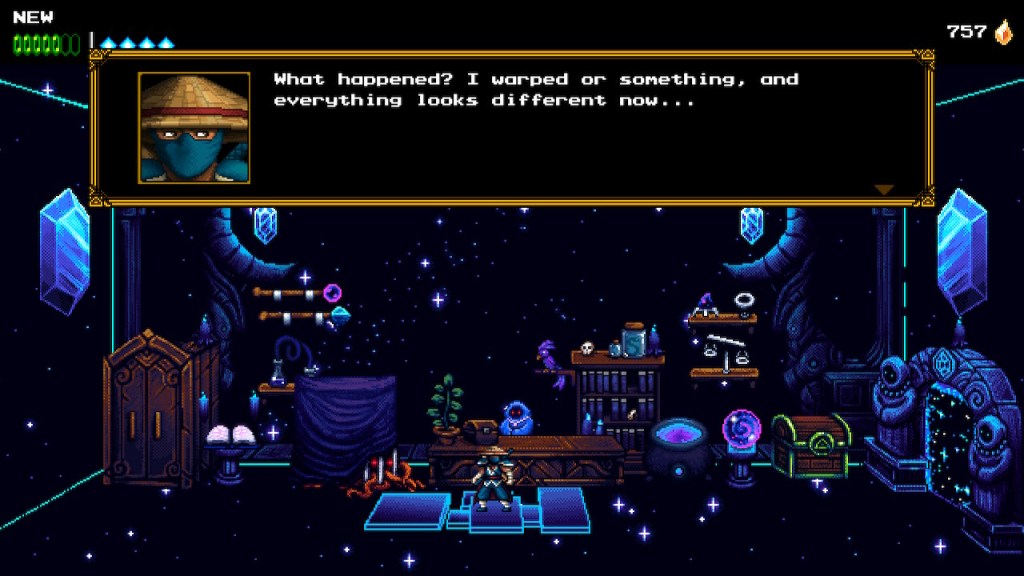


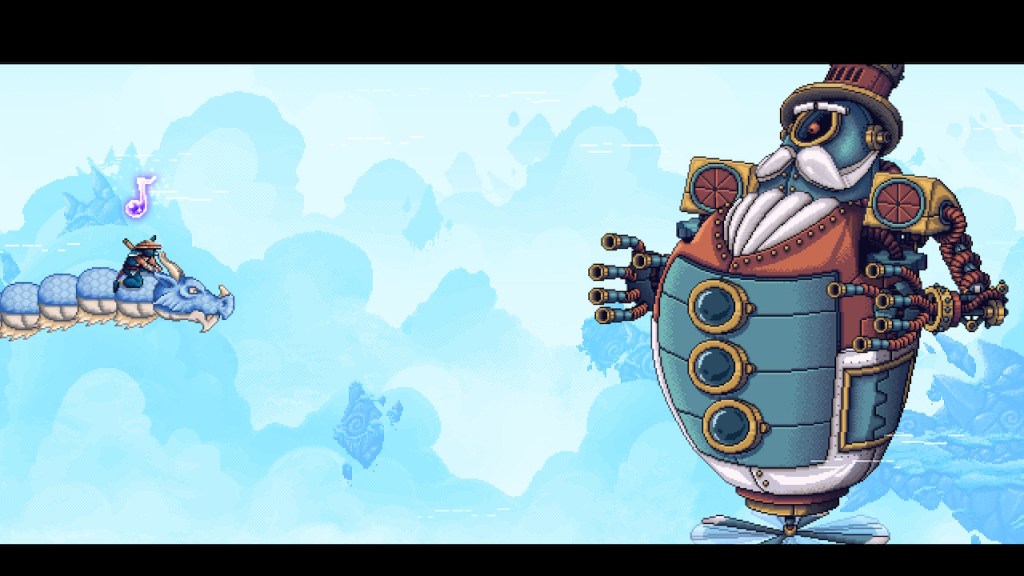
The Messenger is special not because of the visual twist from 8-bit to 16-bit, but instead because of how the game switches genres half-way through. In the first half of the game you make your way through a number of levels, each ending with a boss fight. After defeating Barma’thazël in the 2D platformer part of The Messenger, I thought I was done with the “big boss fight” and the game. I was not ready for what would come next.
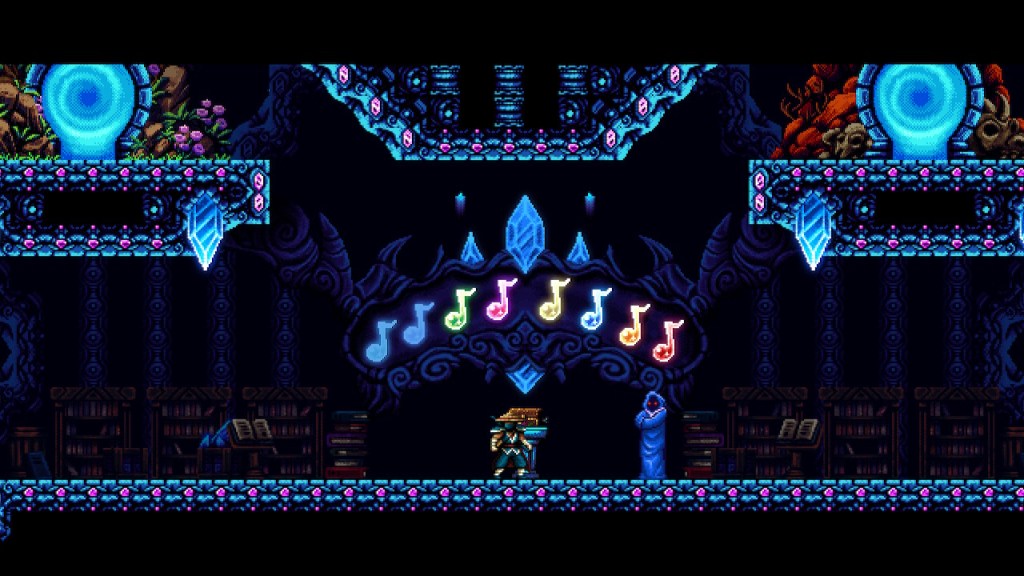
The game switched to a MetroidVania, where you revisit the levels as one big interconnected map. The bosses are gone (with a few new exceptions), but you are now searching for Music Notes and any missing items to beat the game. The map even expands with a few new areas. In the final hours of The Messenger, I thought I had reached the ending multiple times.
My first playthrough lasted roughly eleven hours, and I only made it through about 50% of the game. By eleven hours into my second playthrough, I had made it much further (about 60-70%).

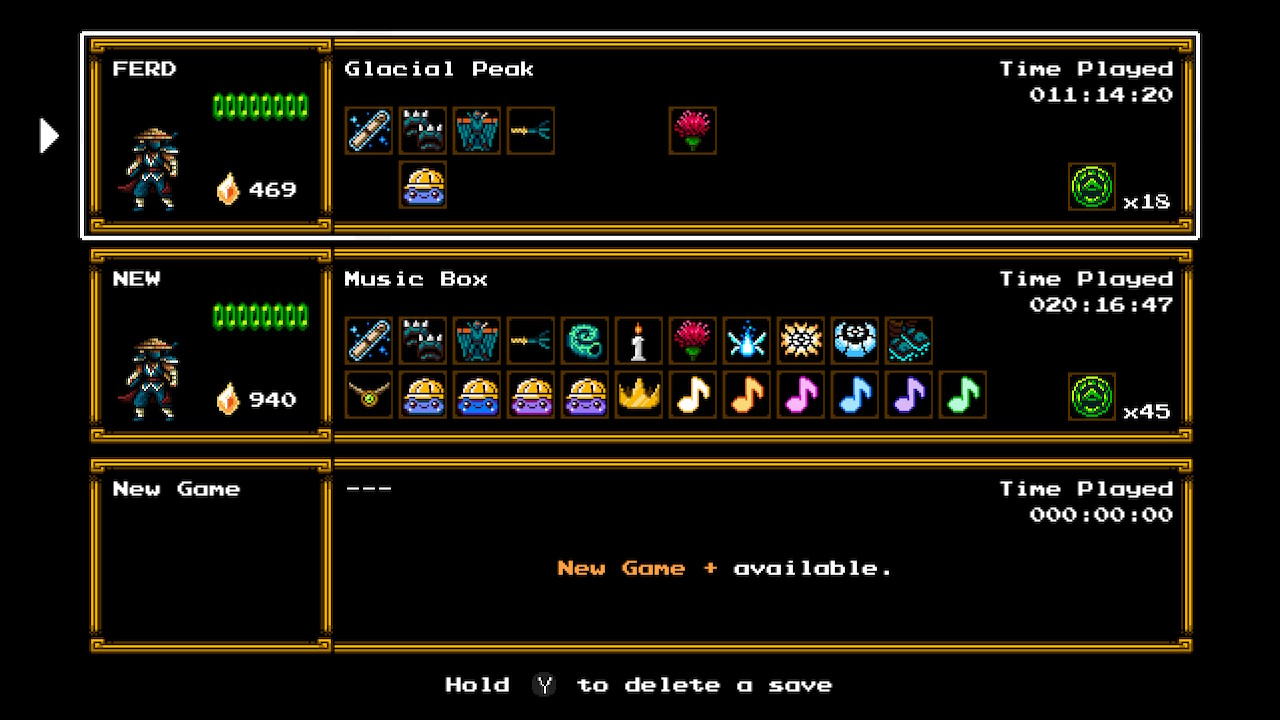
Playing through The Messenger now, in anticipation for Sea of Stars has been a very different experience. I quickly cleared the platforming half of the game, while running into a little trouble on certain boss fights. Once I finished that section, I really got a chance to enjoy re-exploring these areas.
I don’t expect Sea of Stars to be anything like The Messenger. I’m not expecting any sort of big twist — maybe in the story itself. I’m excited because The Messenger built my trust in the team at Sabotage Studios and knowing that they grew up loving retro turn-based RPGs, they most likely put their hearts into this game as well.

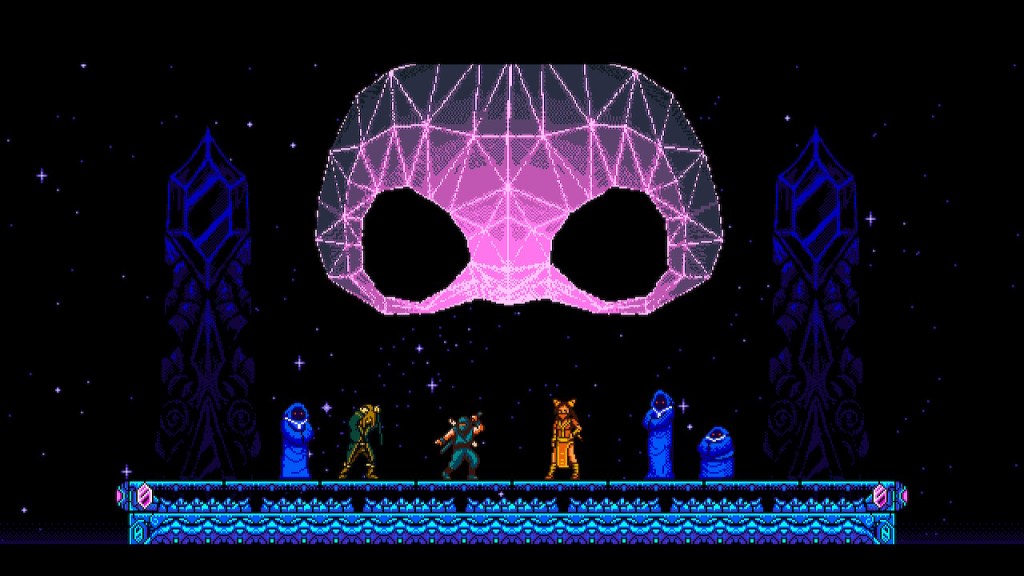
I myself did not grow up on turn-based RPGs. I discovered them later on in life. I am however a fan of indie developers exploring new genres with each project. They could have easily kept going with their first idea and made The Messenger 2, but I’m looking forward to this new world and seeing how it connects to the world of The Messenger.
I’ll be back in a few weeks with my thoughts on Sea of Stars. For now, if you haven’t played The Messenger, maybe you should give it a shot — or wait until after Sea of Stars.
One last thing I’d like to mention is the humor within the story and writing of The Messenger. Below is a showcase of some of my favorite Quarble quotes.


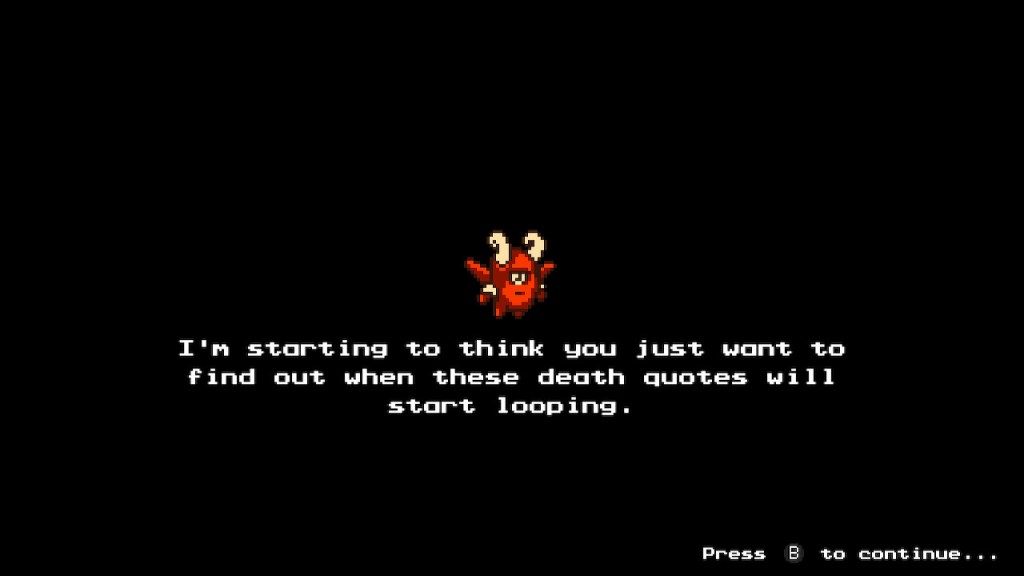
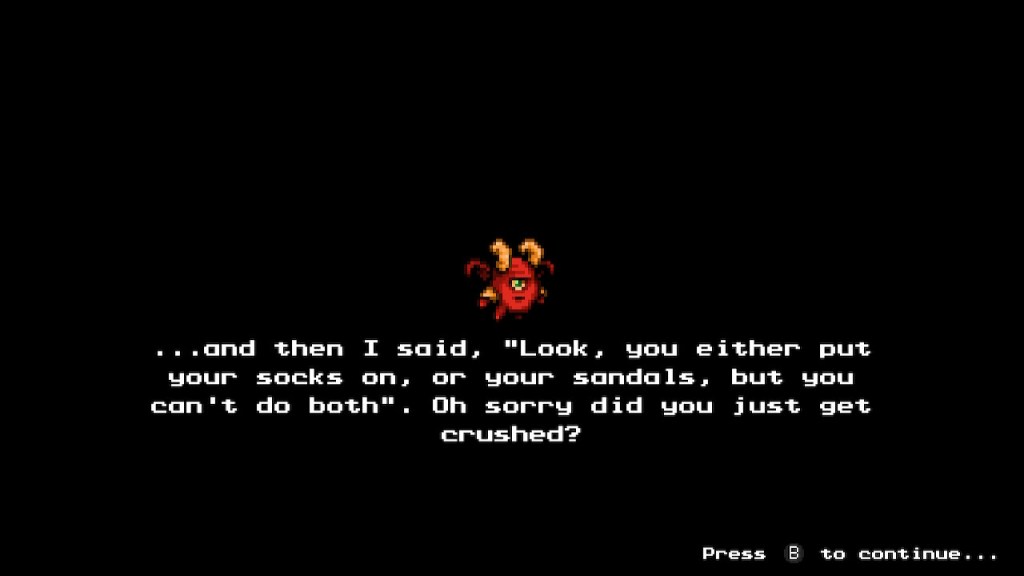

The story of The Messenger is sort of serious in the way that many of the retro games were trying to be back then, but it’s also not afraid to poke fun at itself and the tropes within these kinds of games from back then and up until today.
*The reason I chose to use David Razowsky’s definition of the MacGuffin was because I am currently reading his book, and came across that section earlier this week.
 VIDEO GAME BOOK CLUB